
What Is a Media-Style Interview and Why It’s the Best Content Format for Thought Leaders
The Problem With Most Expert Content
You’re an expert. You have real experience, hard-won frameworks, and genuine insight that could help your ideal clients. But when a prospect lands on your website or finds your LinkedIn profile, what do they actually see?
A headshot. A list of credentials. Maybe a testimonial or two. Possibly a blog post from eight months ago.
None of that builds trust fast enough. Your personality doesn’t come through. And none of it answers the question every prospect is quietly asking themselves:Is this person the real deal?
Enter the media-style interview.
What a Media-Style Interview Actually Is
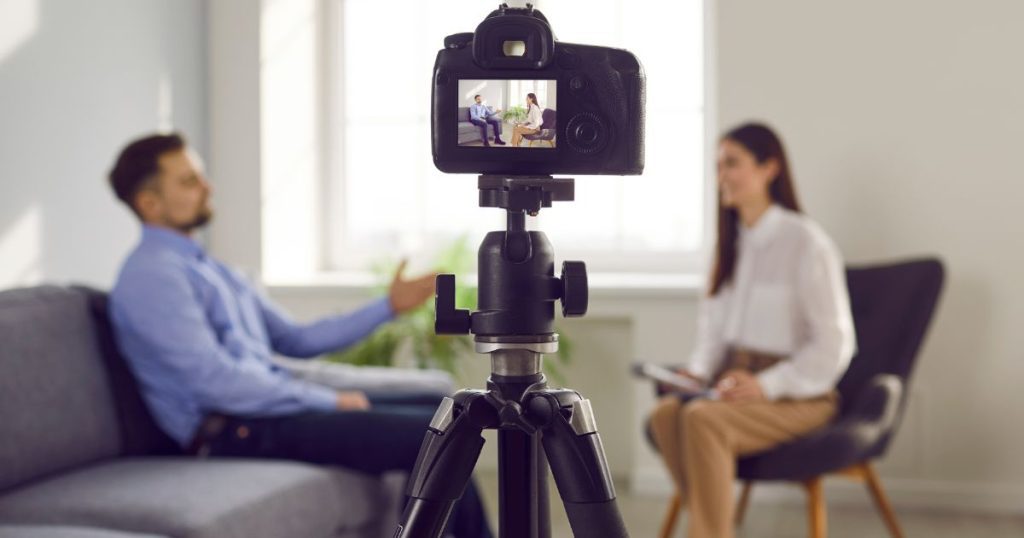
A media-style interview is a professionally produced video conversation designed to position you as a credible, authoritative expert — the same way a feature segment on a major network or a profile piece in a respected publication would.
The format centers on a skilled interviewer asking you thoughtful, substantive questions about your area of expertise. You respond conversationally. What emerges is content that mirrors what people expect from established, trusted experts — polished, substantive, and credible. It’s a strategic content asset with one clear purpose: making you the obvious choice before a prospect ever books a call.
These interviews typically run five to fifteen minutes. They work across your entire marketing ecosystem — website homepage, LinkedIn profile, client proposals, email sequences, speaking applications — anywhere a prospect might evaluate you.
How It Differs From Other Video Formats
Not all video content serves the same purpose. Here’s what sets each format apart.
The Selfie or Talking-Head Video
Most coaches and consultants start here. You film yourself on your phone or laptop, post it to social media, and hope it connects. The problem isn’t your effort — it’s perception. Low-production video can signal limited investment, and prospects often equate production quality with professional credibility. That’s not always fair, but it’s reality
The Podcast Appearance
Podcast guesting has real value, but you don’t control it. The host controls the questions, the framing, the editing, and the distribution. You might deliver your best insights at minute forty-two, but most listeners won’t make it that far. It’s also audio-first, which means it doesn’t translate cleanly to the visual platforms where most buying decisions actually happen.
The Testimonial Video
Testimonials build social proof, but they’re not about you — they’re about your clients. They answer “did this work for someone else?” not “do I trust this person?” Both questions matter, but they belong to different moments in the buying journey.
The Brand Video or Sizzle Reel
These usually cost more, involve heavy production, and feel more like advertising than genuine conversation. They work for brand awareness, but they don’t build the trust that comes from watching a real conversation between two people.
The Media-Style Interview
The interview format does something the others can’t: it places you in a context audiences already recognize as credible. When someone is being interviewed — professional lighting, clean audio, a skilled interviewer — viewers immediately see that person as authoritative before they’ve said a word.
It also captures something scripted content never can: how you actually think. The way you explain a concept, the pause before a nuanced point, the slight humor in how you frame a challenge — these details make prospects feel like they already know you.
Why the Format Works So Well for Coaches, Consultants, and Speakers
Thought leaders sell trust. That’s the actual product. Whether you’re a business coach, an executive consultant, a keynote speaker, or a leadership trainer, clients aren’t just buying a methodology — they’re buying confidence in you specifically.
The media-style interview accelerates that trust-building process in three concrete ways.
1. It Demonstrates Expertise Without Claiming It
There’s a significant difference between saying “I’m an expert in organizational change management” and actually being asked a sharp question about it — then giving a clear, compelling, real-world answer.
The interview format shows your thinking in action. Prospects don’t have to take your word for your expertise; they can watch you demonstrate it. That’s far more persuasive than any credential or bio paragraph.
2. It Lets Personality Come Through
High-ticket buying decisions are deeply personal. Clients want to know if they’ll actually enjoy working with you. Text and static content can’t communicate warmth, confidence, or the particular way you see the world. Video can — and the interview format creates the most natural version of that, because you’re responding in real time rather than performing a script.
3. It Fits How Prospects Actually Research
Before booking a discovery call, most prospects will look you up. They’ll check your website, scan your LinkedIn, maybe Google your name. What they find in that research phase heavily influences whether they reach out or quietly move on.
A strong media-style interview on your homepage or LinkedIn profile transforms that moment. Instead of a static page that looks like every other consultant’s website, there’s a video that immediately shows who you are, how you think, and why you’re worth talking to. That’s what separates someone closing the tab from someone clicking “Book a Call.”
What Makes a Media-Style Interview Effective (Not Just Professional)
Production quality matters, but it’s not everything. A well-lit video with weak questions is still a weak video.
The most effective media-style interviews share a few characteristics:
The questions are substantive. Generic questions produce generic answers. The best interviews push you to articulate your actual perspective — your frameworks, your contrarian takes, your real-world observations. That’s what separates an interview people remember from one they forget the moment it ends.
The conversation feels natural. You’re not delivering a performance — you’re having a real exchange that happens to be captured on camera. When it works, viewers forget they’re watching marketing content. They’re just watching someone interesting talk about something they care about.
It’s edited for clarity and impact. A raw recording and a finished video are completely different things. Good editing removes the filler, tightens the pacing, and highlights the strongest moments. The result feels confident and purposeful — not like watching someone wander through their thoughts for twelve minutes.
It’s designed for deployment, not storage. The video needs to live somewhere useful — homepage hero section, LinkedIn featured section, proposal documents, email signatures. A media-style interview buried in a Google Drive folder serves no one.
The Trust Gap It Closes
Here’s the practical reality for most coaches and consultants: there’s a significant gap between when a prospect first encounters you and when they feel ready to have a real conversation.
Most content doesn’t close that gap — it just fills time. Blog posts, social media, and newsletters all have their place, but they’re slow. They require repeated exposure over weeks or months before trust accumulates.
A well-executed media-style interview can compress that timeline dramatically. Consider this: someone who just watched you break down the problem you solve for ten minutes — seeing your thought process, hearing your approach — reaches a completely different conclusion than someone who skimmed your about page. One person is ready to have a conversation. The other is still deciding if it’s worth their time.
This changes how the format performs in proposals and outreach. Rather than sending a PDF and crossing your fingers, you’re offering prospects a way to get their unspoken questions answered before you’ve even spoken.
Why This Is the Gold Standard for Thought Leader Content
Content creation offers many paths, and most have value in the right situation. But for coaches, consultants, and speakers selling high-trust, high-ticket services, the media-style interview stands apart because it does three things simultaneously that no other format does as well:
- It establishes credibility through production quality and format context
- It demonstrates expertise through the actual substance of the conversation
- It builds personal connection through authentic, unscripted personality
That combination is rare. And when it’s executed well, it doesn’t just help you get more clients — it helps you attract the right ones, the people who already understand your value and are ready to invest in it.
How Obvious Choice Interview Approaches This Format
At Obvious Choice Interview, this is the only thing we do — and that focus matters.
You schedule your interview, record it remotely or in-studio, and receive a finished, professionally edited video ready for immediate use. The interview brings out your best thinking — your real perspective, your specific point of view, the elements that actually set you apart. What you receive goes beyond just a video. It’s an asset that builds trust on your behalf every time a prospect researches you, reviews your proposal, or visits your website for the first time.
Conclusion
The question isn’t whether you need video content — that’s settled. The question is whether the video content you have is actually doing the job: building trust, demonstrating expertise, and making prospects feel confident before they ever reach out.
A media-style interview is the most effective format for that job. It’s not the flashiest option or the cheapest one, but for thought leaders who are serious about how they show up to prospects, it’s the format that consistently moves the needle.
If you’re a coach, consultant, or speaker who wants to show up with the kind of credibility that makes you the obvious choice, learn more at obviouschoiceinterview.com.