
Remote Video Interview vs. In-Studio Recording: Which Is Right for You
#remote-video-interview-vs-in-studio-recording-which-is-right-for-you-2026
You’ve decided to create a professional media interview to showcase your expertise. Smart move. But now you’re facing a choice: record remotely from your office or travel to a professional studio.
Both options produce the same outcome—a polished video asset that positions you as the obvious choice in your field. The question is which approach fits your situation, budget, and goals.
Here’s what you need to know to make the right decision.
The Core Difference: Location vs. Production Value
Remote interviews happen wherever you are. You join a video call, answer thoughtful questions about your expertise, and receive a professionally edited final product. The entire process takes place from your office, home, or any quiet location with good internet.
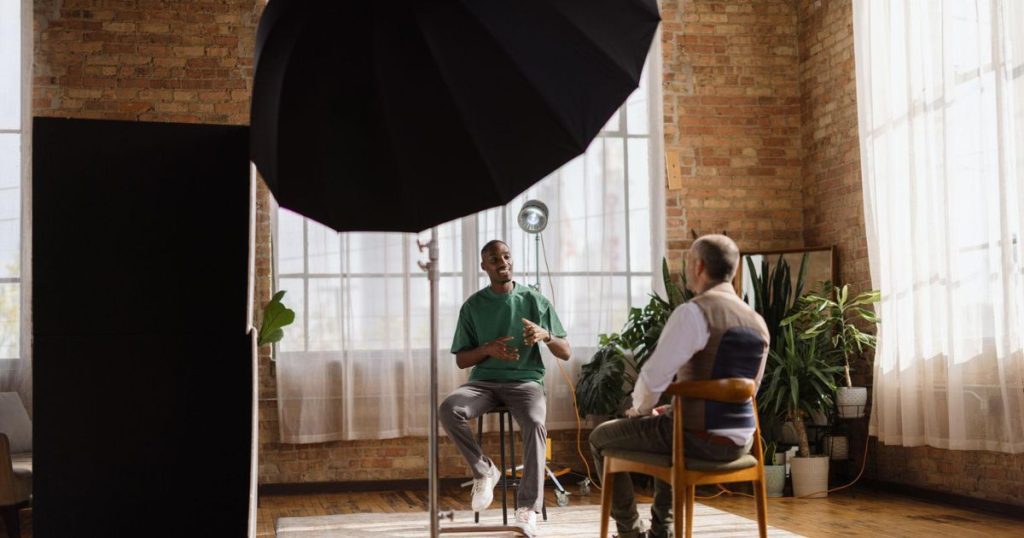
In-studio recording means traveling to a professional facility. You sit across from an interviewer in a controlled environment with multiple cameras, professional lighting, and broadcast-quality audio equipment.
Both approaches create the same type of content—a media-style interview that builds prospect trust before sales conversations begin. The difference lies in convenience, cost, and production aesthetics.
Remote Video Interviews: Maximum Convenience
The Remote Advantage
Remote recording removes every logistical barrier. No travel time, no scheduling around studio availability, no rushing through traffic to make your appointment. You record from wherever you feel most comfortable and confident.
The technical quality surprises most people. Modern remote video production captures crisp audio and sharp visuals that look professional on websites, LinkedIn profiles, and client proposals. The key is working with a service that knows how to direct remote sessions and edit the footage to broadcast standards.
When Remote Makes Sense
Choose remote recording if you value convenience above all else. Busy consultants who travel frequently often prefer this option. You can record between client calls or from your home office on a Saturday morning.
Remote also works well if you’re naturally comfortable on camera. Some experts perform better in familiar surroundings than in formal studio settings. If you do your best work from your usual environment, remote recording captures that authentic energy.
Geographic constraints make remote the obvious choice for many professionals. Not everyone lives near a quality studio, and travel costs can quickly exceed the price difference between recording options.
Remote Limitations
The main tradeoff is visual polish. Remote interviews look professional but not cinematic. You won’t get the multiple camera angles, dramatic lighting, or broadcast-level production values that studios provide.
Audio quality depends on your environment. While professional remote services provide detailed setup instructions and test calls, you can’t completely control background noise or room acoustics the way a studio can.
Technical issues occasionally disrupt remote sessions. Internet hiccups, software glitches, or hardware problems can interrupt the flow of conversation. Professional services build buffer time into remote sessions, but studios eliminate these variables entirely.
In-Studio Recording: Maximum Impact
The Studio Advantage
Studios create content that looks like it belongs on television. Multiple camera angles, professional lighting design, and broadcast-quality audio equipment produce videos with serious visual impact.
The controlled environment eliminates distractions. No background noise, no lighting issues, no technical interruptions. You focus entirely on delivering your expertise while professionals handle everything else.
Many experts perform better in studio settings. The formal environment signals importance and helps some people elevate their energy and presence. If you speak at conferences or appear on podcasts regularly, studios feel familiar and comfortable.
When Studios Make Sense
Choose studio recording if visual impact matters most for your goals. Keynote speakers who use their interview videos in speaker reels often prefer the cinematic quality that studios provide.
Studios work well for experts who want the full media experience. Some professionals find that the formal interview setting—sitting across from a skilled interviewer in a broadcast-style environment—brings out their best performance.
If you’re using the video as a cornerstone asset for major business development, the extra production value can justify the additional investment. High-ticket consultants who include interview videos in six-figure proposals often choose studio recording.
Studio Considerations
The main drawback is logistics. You need to travel to the studio location and block out more time for the entire experience. This includes travel time, setup, recording, and any potential delays.
Studio recording costs more than remote options, though the price difference reflects the additional production resources and facility overhead.
Some experts feel less natural in formal studio environments. If you’re more comfortable in casual settings, the studio formality might work against your authentic communication style.
Quality Comparison: What Actually Matters
Both remote and studio recording produce professional results that build credibility with prospects. The quality difference is real but often less significant than people expect.
Remote interviews look polished and professional. They clearly communicate expertise and build trust with potential clients. The slight reduction in production value rarely affects the video’s ability to position you as an authority in your field.
Studio recordings look more impressive and cinematic. They carry additional visual weight that can enhance your perceived authority. However, content quality—what you actually say during the interview—matters more than production aesthetics for most business applications.
Consider where and how you’ll use the video. For LinkedIn posts and website embedding, both options work equally well. For speaker reels or high-stakes proposals, studio quality might provide a meaningful advantage.
Cost and Value Analysis
Remote interviews typically cost less than studio recording, making them accessible to more professionals. The price difference reflects the reduced production overhead and facility costs.
Studio recording requires a higher investment but delivers maximum production value. The additional cost buys you broadcast-quality visuals, multiple camera angles, and a premium recording environment.
Think about return on investment rather than absolute cost. If the video helps you close one additional client, either option pays for itself many times over. Choose based on which approach best serves your specific business goals and budget.
Making Your Decision
Start with your primary use case. How will you deploy this video asset? Website embedding and LinkedIn sharing work well with either option. Speaker reels and high-stakes proposals might benefit from studio quality.
Consider your comfort level and performance style. Some experts shine in familiar environments, while others elevate their presence in formal studio settings. Choose the environment where you’ll deliver your best performance.
Factor in practical constraints. If travel is difficult or you have a packed schedule, remote recording removes logistical barriers. If you want the full media experience and have flexibility, studios provide maximum impact.
Both approaches create professional video assets that position you as the obvious choice in your field. The right choice depends on your specific situation, goals, and preferences.
Getting Started
Whether you choose remote or studio recording, the key is working with a service that specializes in expert positioning rather than generic video production. Media-style interviews require specific skills in question development, interview direction, and post-production editing.
Your expertise deserves to be seen, not just described. A professionally produced interview—whether recorded remotely or in-studio—transforms invisible expertise into a compelling video asset that builds prospect trust before sales conversations begin.
Ready to showcase your expertise with a professional media interview? Learn more at obviouschoiceinterview.com to explore both remote and studio options for your situation.