
How to Use a Media Interview to Close More Coaching Clients in 2026
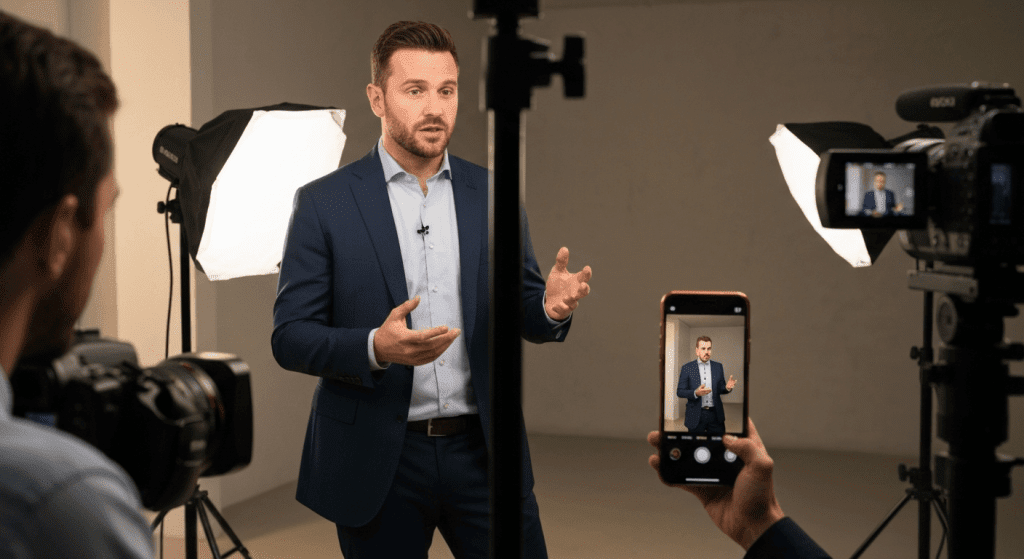
Table of Contents
- Why Coaching Clients Ghost Before the First Call
- What a Media Interview Actually Does for Your Business
- How the Format Builds Trust Faster Than Any Bio or Testimonial
- Where to Deploy Your Interview to Close More Clients
- Remote vs. In-Studio: Which Option Is Right for You
- What Makes This Different From DIY Video
- FAQs
- The Bottom Line
Why Coaching Clients Ghost Before the First Call
You’ve been doing this work for years. Your clients get real results. You know your methodology cold.
And yet prospects still go quiet after the first touchpoint. They compare you to someone with half your experience. Sometimes they just disappear without a word.
It’s not that you lack credibility. It’s that your credibility isn’t visible.
When someone finds you online, they’re making a judgment call in seconds—scanning your LinkedIn profile, your website, maybe a proposal you sent over. If nothing on those pages immediately signals “this is the person I need,” they move on. Not because you weren’t the right fit. Because nothing showed them you were.
That’s the core problem a media interview solves.
What a Media Interview Actually Does for Your Business
A media-style interview is not a testimonial. It’s not a talking-head explainer. It’s not something you record on your phone between meetings.
It’s a professionally produced video where you’re positioned as the featured expert—the way you’d appear in a documentary, a respected business publication, or a serious podcast. The format itself signals authority before a single word is spoken.
When a prospect watches it, they’re not reading a claim you made about yourself. They’re watching evidence. That shift matters more than most coaches realize.
Here’s what tends to change when you have one:
- Prospects arrive at your sales call already confident in your expertise
- You spend less time recapping your background and more time focused on their problem
- Your proposal lands differently because they already know who they’re hiring
- You stop losing deals to people who simply present better online
The interview doesn’t manufacture new expertise. It makes the expertise you already have impossible to miss.
How the Format Builds Trust Faster Than Any Bio or Testimonial
People trust what feels earned, not promoted.
A written bio is self-reported. A client testimonial is appreciated but expected. A media-style interview feels like editorial coverage—it carries the psychological weight of third-party validation, even when it’s a purpose-built asset.
That’s because the format does the heavy lifting. Being interviewed positions you differently than presenting yourself. The structure implies someone thought you were worth featuring. That impression sticks.
Why Written Credentials Fall Short
Credentials on a page require the reader to interpret them. “15 years of experience” means something different to every prospect who reads it. A video interview shows what 15 years of experience actually looks like in practice—the depth of thinking, the clarity of communication, the confidence behind the answers.
Why Testimonials Alone Aren’t Enough
Client testimonials are valuable, but they answer one specific question: did this person help others? A media interview answers a different one: is this person the right expert for me? Prospects ask both, and you need to answer both.
When you pair a strong interview with solid testimonials, you’re covering the full picture. The interview establishes who you are. The testimonials confirm what you deliver.
Where to Deploy Your Interview to Close More Clients
A finished video sitting in a folder doesn’t help anyone. Placement matters. Here’s where coaches, consultants, and speakers tend to see the most impact.
Your Website Homepage
Most prospects land here after hearing your name for the first time. If the first thing they encounter is a block of text about your background, you’ve already lost momentum. A media interview placed prominently on your homepage gives visitors an immediate, compelling reason to stay.
Your LinkedIn Profile
This is where your prospects are actively deciding who to hire. A featured video does something a written summary never can—it shows people what it’s like to engage with you before they’ve ever picked up the phone. Clips from your interview can also be shared as regular posts to build ongoing visibility with your audience.
Your Proposals
Most proposals are documents. They list services, timelines, and prices. Very few include something that reminds the decision-maker why they were interested in the first place. Adding your interview to a proposal keeps your authority front and center when the client is weighing their options.
Pre-Call Outreach
When you’re following up with a warm lead or preparing someone for a discovery call, sending your interview in advance changes the dynamic. They show up already familiar with how you think. The call becomes a real conversation rather than an evaluation where you’re starting from zero.
Remote vs. In-Studio: Which Option Is Right for You
Obvious Choice Interview offers two production options. Both are built to position you as a credible expert. The right choice comes down to your goals and how you want to show up in your market.
Remote Interview — $1,795
Recorded from your location, professionally produced, with the same editorial positioning as the in-studio version. This works well if you want a strong authority asset without the logistics of travel, or if your audience responds to a modern, accessible format.
For most coaches and consultants selling high-ticket services, a single new client engagement covers the cost.
In-Studio Interview — $2,295
The in-studio option puts you in a premium production environment. The elevated setting is designed for those competing at the highest level in their market—whether that’s enterprise clients, speaking engagements, or any situation where first impressions carry serious weight.
Both options follow the same straightforward process: schedule your interview, record it, share the finished asset. Spots are limited each month.
What Makes This Different From DIY Video
Tools like Loom, BombBomb, and Bonjoro are useful for quick, personal video messages. They’re not built to establish authority.
When a prospect watches a Loom recording, they see a screen share or a casual webcam clip. It communicates effort. It doesn’t communicate expertise.
The difference is format and production. A media-style interview carries editorial credibility that a self-recorded video simply can’t replicate. The framing, the lighting, the interview structure, the professional finish—all of it signals that you’re someone worth taking seriously.
Testimonial services like Testimonial Hero serve a real purpose, but they’re built to capture what clients say about you—not to show who you are. A media interview does the latter.
The combination of professional production and expert positioning strategy is what makes this format work. That’s not something you can get from a DIY tool or a generic video service.
FAQs
What is a media interview for coaches, and how does it help close clients?
A media interview is a professionally produced video where you’re positioned as a featured expert. It builds prospect trust before your first sales conversation by showing your credibility rather than asking people to take your word for it. Coaches who use this format often find that prospects arrive at discovery calls more confident and ready to move forward.
How is a media interview different from a testimonial video?
A testimonial captures what your clients say about you. A media interview shows who you are as an expert. They serve different purposes—testimonials confirm results, while a media interview establishes authority and gives prospects a reason to choose you before they’ve spoken with anyone.
Where should I use my media interview to get the most value?
The highest-impact placements are your website homepage, your LinkedIn profile, and your proposals. You can also share clips as LinkedIn posts or include the video in pre-call outreach to warm up prospects before a discovery call.
Do I need to travel to a studio to get a professional result?
No. Obvious Choice Interview offers both remote and in-studio options. The remote interview is professionally produced and delivers strong authority positioning. The in-studio option is there for those who want a premium production environment and elevated presentation.
How much does a media interview cost, and is it worth the investment?
The remote option is $1,795 and the in-studio option is $2,295. For coaches and consultants selling high-ticket services, a single new client engagement typically covers the cost—and the video keeps working for you across every channel where you share it.
Can I use the interview on LinkedIn specifically?
Yes. LinkedIn is one of the primary places coaches and consultants deploy their interview. You can feature it on your profile and share clips as posts to build ongoing visibility with your target audience.
What if I’m not comfortable on camera?
The interview format is designed to help you show up naturally. You’re answering questions about your expertise—the topic you know better than anyone. The production team handles the technical side, so you can focus on the conversation. Most people find it considerably easier than presenting directly to a camera.
The Bottom Line
Your expertise isn’t the problem. The problem is that prospects can’t see it clearly enough to choose you with confidence.
A media-style interview gives them something to watch—something that shows them who you are and why you’re the right choice. It works before you ever get on a call. It works when your proposal is sitting in someone’s inbox. It works every time a new prospect lands on your LinkedIn profile.
If you’re a coach, consultant, or speaker who’s tired of proving your credibility from scratch on every sales call, this is worth a closer look.
Learn more at obviouschoiceinterview.com.