
Case Study: How a Keynote Speaker Used a Media Interview to Land Premium Clients in 2026
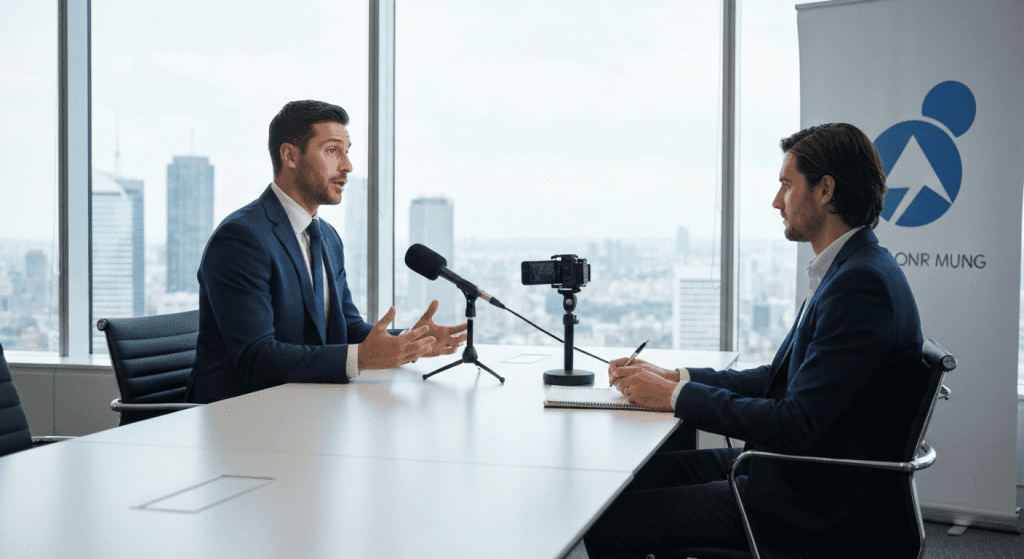
Table of Contents
- The Problem Most Keynote Speakers Don’t Talk About
- Meet the Speaker: Established but Invisible Online
- What Changed: A Media Interview Instead of More Marketing
- How the Interview Was Used Across Three Channels
- The Results: Warmer Calls, Faster Decisions, Better Clients
- Why a Media Interview Works When Other Content Doesn’t
- What This Means for You
- FAQs
The Problem Most Keynote Speakers Don’t Talk About
You’ve spent years building real expertise. Hundreds of talks delivered, serious clients served, a reputation earned the hard way.
But when a prospect lands on your website or LinkedIn profile, none of that comes through. They see a bio, a headshot, maybe a speaker reel that looks like everyone else’s.
So they hesitate. They pull up three other speakers. Sometimes they just disappear.
It’s not that you lack credibility. It’s that your credibility isn’t obvious.
That’s what this case study is about.
Meet the Speaker: Established but Invisible Online
The speaker in this case study has over a decade of experience as a professional keynote speaker. She works with corporate clients on leadership and team performance, with engagements typically ranging from $8,000 to $20,000.
Her referral pipeline was solid. Outside of warm introductions, though, converting cold or warm prospects who found her online was a different story. They’d visit her website, read her bio, and go quiet.
She wasn’t losing deals because her content was weak. She was losing them because her online presence didn’t communicate what her existing clients already knew: she was the right choice.
She’d tried refreshing her website copy, posting more consistently on LinkedIn, even recording a few videos herself. Nothing moved the needle. The videos felt informal. The copy sounded like every other speaker’s copy.
She didn’t need more content. She needed a different kind of content.
What Changed: A Media Interview Instead of More Marketing
She booked an in-studio interview through Obvious Choice Interview. The format is straightforward: a professionally produced, media-style interview where she’s positioned as the expert being featured—not a speaker trying to sell herself.
That distinction matters more than it might seem. A media interview feels earned. It signals that someone thought her perspective was worth capturing seriously, on camera, with real production behind it. That’s a fundamentally different signal than a selfie-style video or a talking-head clip recorded on a laptop.
Production was handled end to end. She showed up, answered thoughtful questions about her work, her approach, and the results her clients get. The finished video was polished, credible, and ready to use.
Three steps: schedule, record, share.
How the Interview Was Used Across Three Channels
On the Website
The interview went on her homepage and her speaker page. Instead of asking visitors to read about her experience, she could now show them. Visitors who watched even two minutes came away with a clear sense of who she was, how she thought, and why she was worth hiring.
Her traffic didn’t change. The quality of inbound inquiries did. Prospects who reached out had already watched the interview. They arrived warmer.
On LinkedIn
Short clips from the interview became LinkedIn posts, each one highlighting a specific insight from the full conversation. They outperformed her previous text posts—not because they were louder, but because they felt substantive rather than promotional.
More practically, when she sent a connection request or followed up with a prospect, she could include a link to the full interview. It did the credibility work before any sales conversation started.
In Proposals
This turned out to be the highest-impact use. She added the interview directly to her proposals, right after her bio. Instead of asking prospects to take her credentials on faith, she gave them something to watch.
The shift was noticeable. Prospects who watched the interview before a follow-up call came in more decisive. Fewer “tell me about yourself” questions. More “how would this work for our team” questions. The conversation moved faster.
The Results: Warmer Calls, Faster Decisions, Better Clients
The clearest change was in how sales conversations felt.
Before the interview, she spent the first 15 to 20 minutes of every discovery call establishing credibility from scratch. After, most of that work was already done. Prospects arrived knowing who she was and why she was worth their time.
She closed two new engagements within 60 days of deploying the interview—both in the $12,000 to $15,000 range. The investment in the interview was recovered with the first booking.
Beyond the numbers, something else shifted. The clients who came in after watching the interview were a better fit. They understood her approach before they signed. Onboarding was smoother. The work itself was better.
That’s what happens when authority is visible before the sale.
Why a Media Interview Works When Other Content Doesn’t
Most content coaches, consultants, and speakers produce is self-promotional by nature—blog posts, LinkedIn updates, speaker reels. Even when the content is genuinely good, it’s coming from you about you. Prospects read it through that filter.
A media-style interview is different. The format itself carries a signal. It looks like something you’d see on a credible outlet. You’re being asked questions, not making a pitch. That changes how the viewer receives you.
Think about the difference between a speaker saying “I’m an expert in leadership” and a journalist asking “Tell us about your approach to leadership.” Same information. Very different credibility signal.
DIY tools like Loom or BombBomb are useful for quick communication, but they don’t create that editorial feel. Customer testimonial services capture what clients say about you—which has value—but it’s still not the same as being positioned as the featured expert.
A media interview sits in a different category. It’s not a testimonial. It’s not a sales video. It’s a credibility asset.
What This Means for You
If you’re a keynote speaker, consultant, or coach with real experience and a referral-heavy business, this probably sounds familiar.
You’re not losing deals because you’re underqualified. You’re losing them because your expertise isn’t obvious to people who don’t already know you.
A professionally produced media interview is one of the most direct ways to fix that. You deploy it once and it works across every channel, every proposal, every sales call—before you ever open your mouth.
The process at Obvious Choice Interview is simple. Schedule your interview, record it remotely or in-studio, and walk away with a finished asset you can use immediately. Remote interviews start at $1,795. In-studio interviews start at $2,295. Spots are limited each month.
If you’re ready to stop explaining your credibility and start showing it, visit obviouschoiceinterview.com to apply.
FAQs
What is a media interview for keynote speakers?
A media interview is a professionally produced video where you’re positioned as the featured expert being interviewed—not a speaker promoting yourself. The format creates editorial credibility that self-produced content typically can’t replicate. It’s built to establish prospect trust before any sales conversation begins.
How is a media interview different from a speaker reel?
A speaker reel shows clips of you on stage. A media interview shows how you think, what you believe, and why your approach works. It answers the questions a prospect has before they’re ready to book you. The two serve different purposes, and many speakers find the interview more useful during the proposal and outreach stages.
Where should a keynote speaker use a media interview?
The most effective placements are your website homepage or speaker page, your LinkedIn profile, and inside proposals. Each one serves a different moment in the buying process, but all three benefit from a credible video asset that builds trust before you get on a call.
Can a media interview help with cold outreach?
Yes. When you include a link to your interview in an outreach message, prospects can watch it before they respond. By the time they reply or agree to a call, they already know who you are and what you do. That context shortens the sales cycle.
How long does it take to get a finished interview?
The process involves three steps: schedule, record, and share. Turnaround depends on whether you choose the remote or in-studio option, but the deliverable is a finished, deployable asset—not raw footage you have to edit yourself.
Is a media interview worth the investment for a keynote speaker?
If you’re selling engagements in the $5,000 to $25,000 range, recovering the cost with a single new client is realistic. The more useful question is how many deals you’re currently losing because prospects can’t quickly see why you’re the right choice. For most established speakers, that number is higher than they’d expect.
What makes Obvious Choice Interview different from general video production services?
Most video production companies focus on the technical execution. Obvious Choice Interview combines professional production with expert positioning strategy built specifically for coaches, consultants, and speakers. The format, the questions, and the editorial approach are all designed to make your expertise visible—not just put you on camera.
Your expertise is real. The question is whether prospects can see it before they decide to move on. A media interview answers that question before you ever get on a call.